
Cache County homeowners needing more space increasingly face a choice between two distinct expansion options: building an accessory dwelling unit (ADU) or adding onto their existing home. Both solve the space problem, but they create very different results in terms of independence, cost, rental potential, and long-term flexibility. Recent changes to Utah’s ADU laws have made accessory dwelling units more accessible than ever, while traditional additions remain the tried-and-true expansion method for growing families. Understanding the differences between these two approaches helps Providence, Logan, and Cache Valley homeowners choose the option that truly fits their goals.
Understanding Accessory Dwelling Units (ADUs)
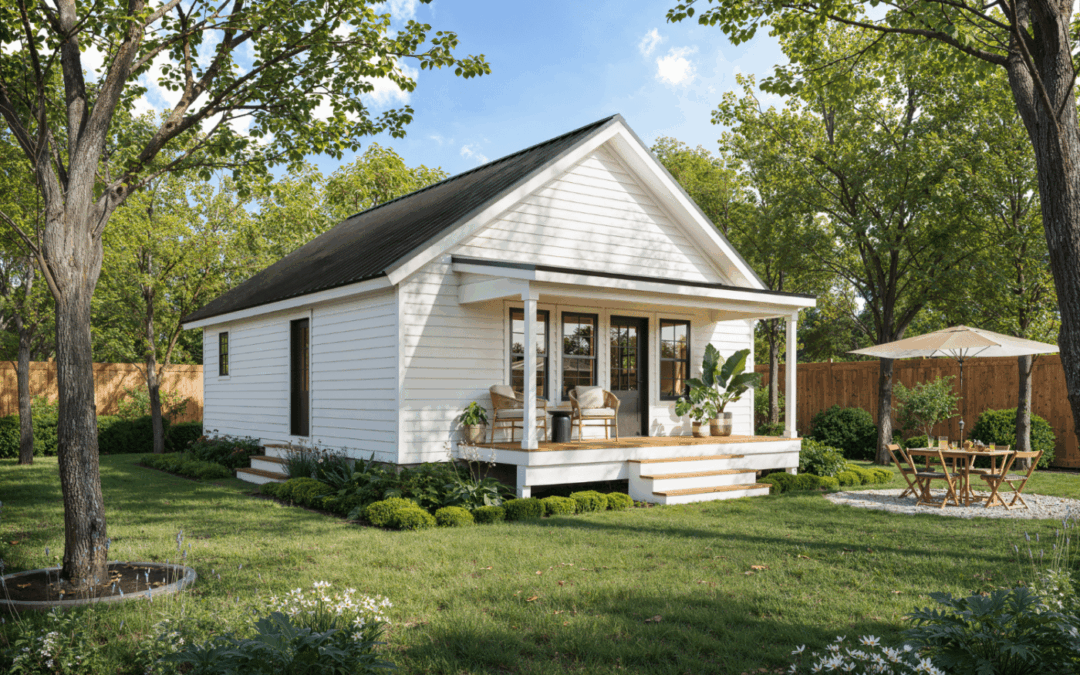
An accessory dwelling unit is a complete, independent living space built on the same lot as a primary residence. ADUs include their own kitchen, bathroom, and sleeping area, functioning as a fully self-contained home within a larger property.
ADU characteristics:
- Complete kitchen, bathroom, and living space independent of the main house
- Separate entrance providing privacy for both households
- Can be attached to the main home, built above a garage, or constructed as a detached structure
- Typically smaller than the primary residence, often 600 to 1,000 square feet
- Requires its own utility connections or sub-metering in many cases
- Functions as a legally separate dwelling unit under most Utah zoning codes
Understanding Traditional Home Additions
A traditional home addition extends the existing house, adding square footage that connects directly to the current floor plan rather than creating an independent unit.
Home addition characteristics:
- Square footage directly connected to existing living space
- Shares the home’s existing kitchen, utilities, and systems
- No separate entrance required, though one can be added
- Typically used for additional bedrooms, bathrooms, or living space
- Functions as part of the single-family home, not a separate dwelling
- Often easier to finance through standard home improvement loans
Utah’s ADU Laws and Cache County Zoning
Utah has progressively expanded ADU allowances in recent years, making them a realistic option for more Cache County properties than in the past. Still, zoning requirements vary by city and lot, so verifying the details early prevents wasted design time.
Zoning considerations to verify:
- Whether your specific lot’s zoning allows internal, attached, or detached ADUs
- Minimum lot size requirements that may apply to detached units
- Owner-occupancy requirements some cities still enforce
- Parking requirements for the additional dwelling unit
- Maximum ADU size limits relative to the primary home’s square footage
- Whether the ADU can be legally rented or is restricted to family use only
Cost Comparison: ADU vs Addition
Construction costs differ significantly between these two options, largely because ADUs require complete, independent systems that a connected addition can often share with the existing home.
| Comparison Factor | ADU | Home Addition |
| Kitchen required | Yes, full kitchen | Optional |
| Separate entrance | Required | Optional |
| Typical cost per sq ft | $300-420 | $250-350 |
| Rental income potential | Yes, independent unit | Not applicable |
A detached 700 square foot ADU might total $210,000 to $290,000 once site work, independent utilities, and a full kitchen and bathroom are included. A similarly sized room addition without a kitchen might run $140,000 to $200,000, though adding a kitchenette or bathroom narrows that gap considerably.
Rental Income and Multi-Generational Living Potential
ADUs offer financial and family flexibility that standard additions cannot match, which explains much of their growing popularity across Utah.
ADU advantages for income and family flexibility:
- Potential rental income from a fully independent unit
- Aging parents can live independently while staying close to family
- Adult children can have their own space while remaining on the property
- Long-term flexibility to use the space differently as family needs change
- Can serve as a guest house when not needed for family or rental purposes
Addition advantages for family living:
- Keeps the entire family under one connected roof
- No need for separate utility accounts or rental management
- Often better suited to families who want togetherness over independence
- Simpler to convert back to standard living space if needs change
Construction Complexity and Timeline
Building an ADU typically takes longer and involves more coordination than adding a room to an existing home.
- ADUs require complete new utility systems, foundations, and often a full roof structure
- Additions can sometimes tie into existing systems, simplifying certain phases
- Detached ADUs cause less disruption to the existing home during construction
- Attached additions may temporarily affect daily life inside the main house
- ADU permitting often involves additional review steps beyond a standard addition permit
Impact on Property Value and Resale
Both options can increase property value, though they appeal to different buyer types and carry different appraisal considerations.
- ADUs appeal strongly to buyers wanting rental income or multi-generational flexibility
- Additions appeal to buyers wanting straightforward additional living space
- ADUs may face appraisal challenges since comparable sales data is still developing in some markets
- Additions typically appraise more predictably since the methodology is well established
- Both options should match neighborhood expectations to maximize resale value
Privacy and Independence Considerations
The biggest practical difference between these options often comes down to how much separation a family actually wants.
- ADUs provide complete separation: separate entrance, kitchen, and living space
- Additions keep everyone within the same connected living environment
- ADUs work well when residents want closeness without sharing daily living space
- Additions work well when families want to spend time together regularly
- Consider how household members’ personalities and routines fit each option
Permitting and Utility Requirements
Both projects require permits, but ADUs typically involve additional documentation that’s worth planning for early.
- ADU permits often require proof of compliance with owner-occupancy or rental rules
- Separate utility metering may require coordination with local utility providers
- Septic systems on rural Cache County lots may need capacity verification for an ADU
- Standard additions usually follow the same permit process as the original home
- Energy code compliance applies to both, but ADUs require it as a complete standalone unit
Making the Right Choice for Your Property
The right decision depends on your goals, budget, and how your lot and zoning allow each option.
Questions to guide your decision:
- Do you want rental income potential, or just more space for your immediate family?
- Does your lot and city zoning actually allow the ADU size and type you’re considering?
- How important is privacy and independence versus togetherness?
- What’s your budget, and how does it compare to realistic costs for each option?
- Will you need this space permanently, or might its purpose change over time?
Explore ADU and Addition Options for Your Cache County Home
Both accessory dwelling units and traditional additions solve real space problems for Cache County families, but they solve different problems in different ways. ADUs offer independence and income potential. Additions offer connected, shared living space. Understanding your specific goals, budget, and property’s zoning helps you choose the option that truly delivers what your family needs.
Poulsen Home Design helps Cache Valley homeowners evaluate both ADU and addition options for their specific properties. Mont and Mary-Ellen Poulsen’s construction background ensures whichever direction you choose, the design works practically and meets current Utah and Cache County requirements.
Ready to explore your expansion options? Contact Poulsen Home Design at (435) 512-5852 to discuss whether an ADU or addition fits your Cache County property and goals. Visit poulsenhomedesign.com to view completed expansion projects throughout the valley. Professional guidance helps you invest confidently in the option that’s actually right for your family.